
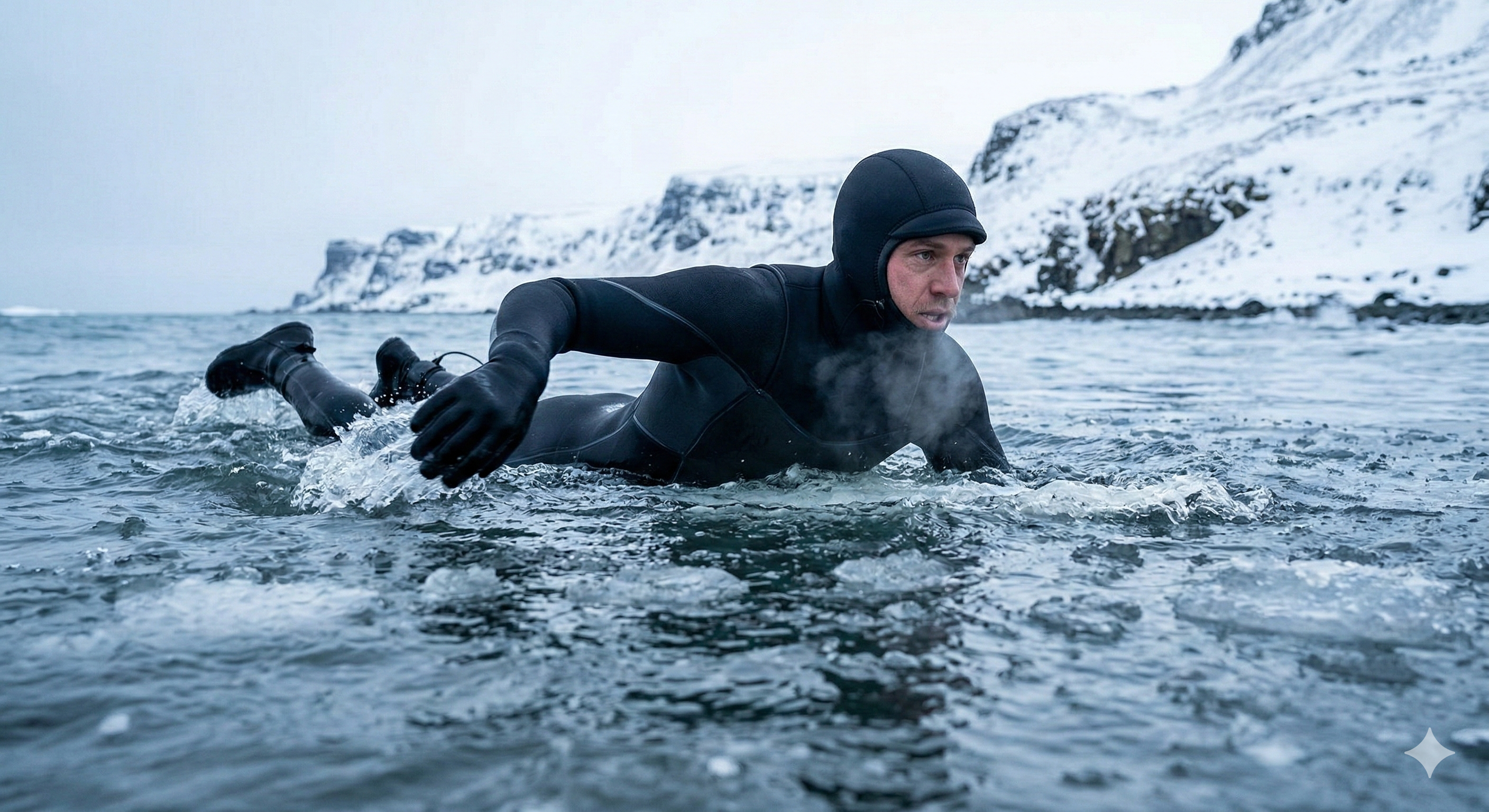
The Cold You Feel Is Only Part of the Problem
Cold water doesn’t just make surfing uncomfortable — it directly reduces how effectively you paddle. Many surfers notice they feel slower, weaker, or late to waves in winter, even when they’re in good shape. That’s not imagined. Cold exposure changes how your muscles, nerves, and cardiovascular system perform.
Cold Water Reduces Muscle Power
As your body cools, blood is redirected away from the extremities to protect vital organs. This reduces oxygen delivery to the shoulders, arms, and hands — the exact muscles responsible for paddling. Colder muscles contract more slowly and generate less force, meaning each stroke produces less drive.
Loss of Dexterity and Coordination
Cold exposure affects nerve conduction speed. In practical terms, your arms don’t just feel weaker — they respond more slowly. Timing, coordination, and fine motor control degrade, making it harder to maintain a clean, efficient paddle cadence.
Increased Energy Cost Per Stroke
When muscles are cold, they become less efficient. You burn more energy to achieve the same output. This leads to faster fatigue, especially during repeated sprint paddles or long holds outside. What feels like a cardio problem is often a thermal one.
Breathing and Heart Rate Changes
Cold water immersion can cause shallow, rapid breathing and elevated heart rate, particularly early in a session. This stress response limits oxygen uptake and makes controlled paddling harder. Until your body adapts, power output remains compromised.
Why Proper Insulation Matters
A well-fitted wetsuit isn’t just about comfort — it preserves performance. By maintaining core temperature, your body can keep blood flowing to working muscles instead of pulling it inward for survival. Warm shoulders and arms mean stronger strokes and better endurance.
What You Can Do to Paddle Stronger in Cold Water
- Wear adequate wetsuit thickness for the conditions
- Seal flush points at the neck, wrists, and ankles
- Use gloves and boots when necessary to prevent rapid heat loss
- Warm up before entering the water to raise muscle temperature
- Expect a slower start — power improves as your body adapts
The Takeaway
Cold water quietly robs paddle power by reducing strength, coordination, and efficiency. The solution isn’t just training harder — it’s staying warm enough to let your body perform. Dial in your insulation, respect the conditions, and you’ll find winter sessions feel far less demanding.