
Why Wetsuit Thickness Matters for Surfing
In surfing, wetsuit thickness directly affects paddling efficiency, endurance, and wave count. Too thin and cold saps your energy between sets. Too thick and shoulder fatigue sets in early. The right wetsuit keeps you warm enough to stay sharp without restricting paddle power or mobility.
Understanding Wetsuit Thickness
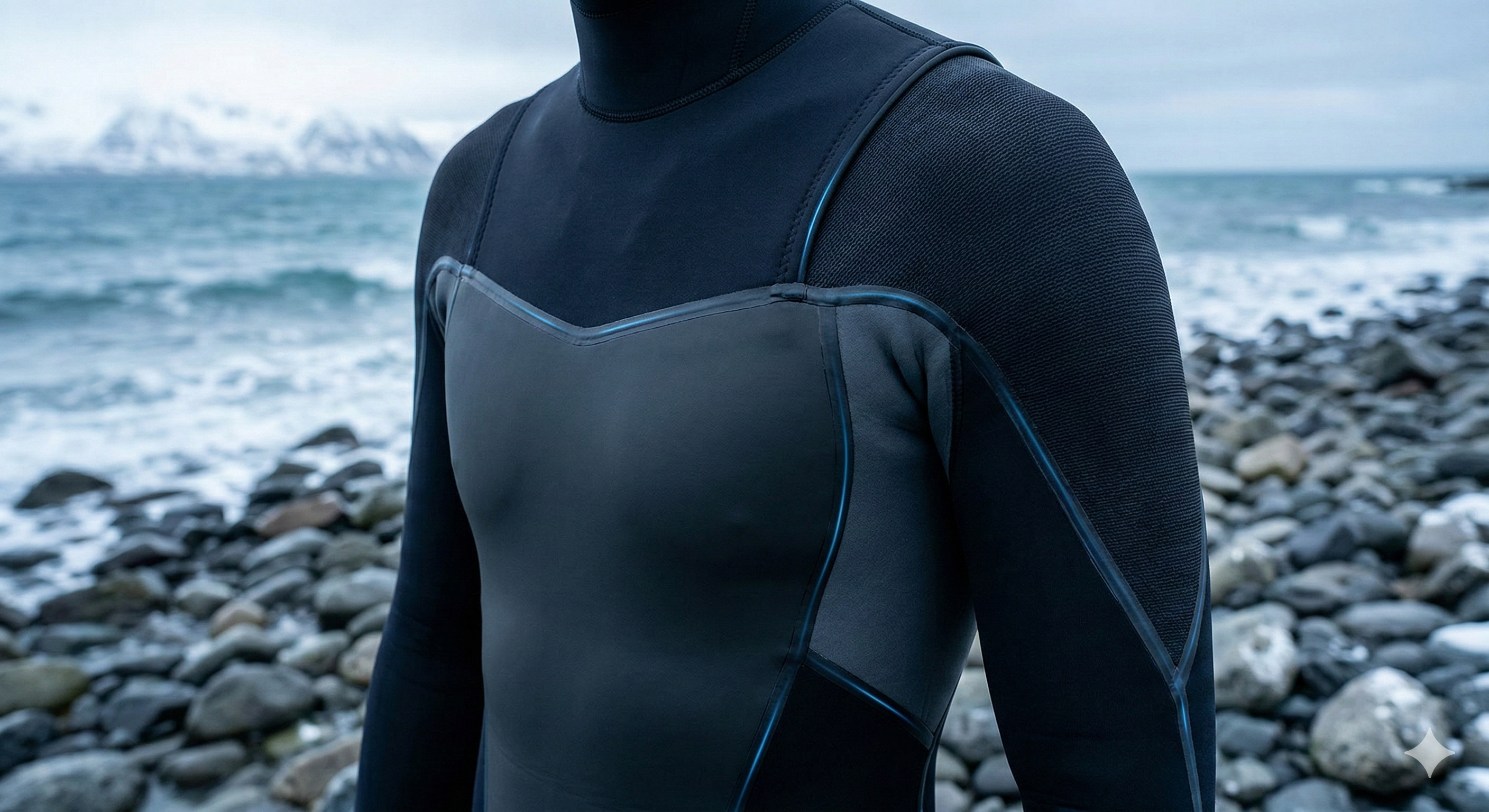
Wetsuit thickness is measured in millimeters and written as two or three numbers, such as 3/2 mm or 5/4/3 mm. The thickest neoprene sits in the torso to protect your core while thinner panels in the arms and legs preserve paddling freedom and smooth duck dives.
Surf-Specific Water Temperature Guide
Because surfers spend long periods sitting still and paddling intermittently, insulation needs are higher than many other water sports. Use this table as a surf-focused baseline.
| Water Temperature | Surf Wetsuit Recommendation |
|---|---|
| 22°C+ / 72°F+ | 2 mm full suit or spring suit |
| 18–22°C / 64–72°F | 3/2 mm full suit |
| 14–18°C / 57–64°F | 4/3 mm full suit |
| 10–14°C / 50–57°F | 5/4 mm or 5/4/3 mm full suit |
| Below 10°C / 50°F | 6/5 mm+ full suit with hood, boots, gloves |
Paddling Time vs. Sitting Time
- Long waits between sets: Choose more warmth to prevent stiffness.
- High paddle volume sessions: Prioritize flexible arm panels.
- Heavy duck diving: Thicker suits should still seal well at the neck and spine.
Fit Is Critical for Surf Performance
A surf wetsuit should feel snug and compressive without limiting shoulder rotation or breathing. Poor fit allows cold water flushing, which kills warmth and focus mid-session. A well-fitted suit stays sealed while paddling, popping up, and duck diving.
Cold-Water Surf Accessories
When water temps drop, accessories extend session length and preserve dexterity:
- Boots: Improve warmth, traction, and board feel in cold lineups
- Gloves: Maintain paddle grip and hand function
- Hoods: Reduce heat loss during long waits between sets
Final Takeaway
For surfing, the right wetsuit thickness is about maximizing wave count without burning energy. Match your suit to the water temperature, your paddling intensity, and your tolerance for cold — and you’ll stay warmer, stronger, and sharper for the entire session.